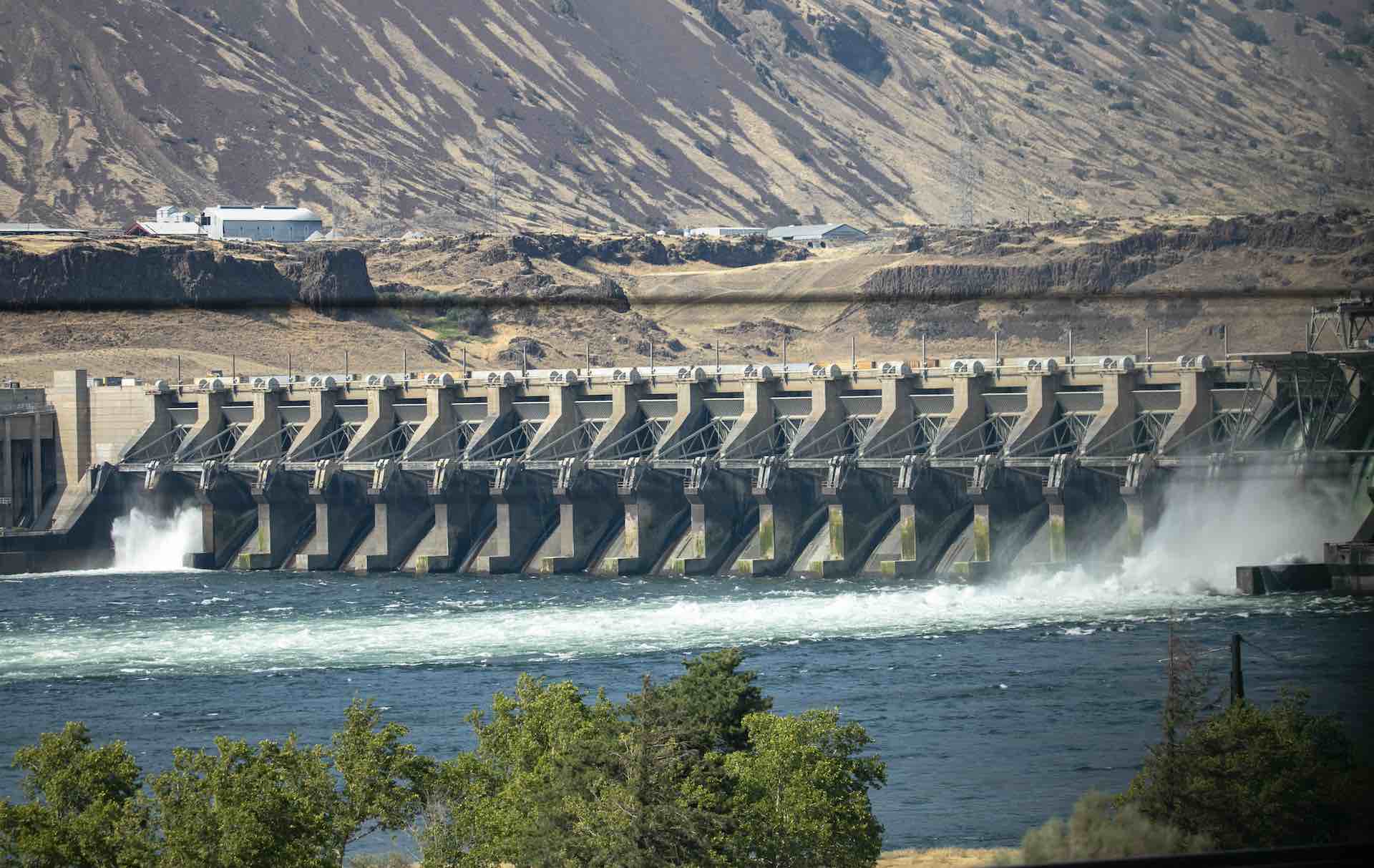
The Columbia River system generates over 40% of the nation's hydroelectric power. From Grand Coulee to Bonneville, these facilities run turbines that have been spinning for decades—and every one of them is fighting the same battle against cavitation. When pitting and erosion damage accumulates on turbine runners, the traditional repair path means dewatering the unit, removing the runner, and shipping it to a machine shop. That process can cost $2-5 million and take a unit offline for months.
For facilities managing tight generation schedules across Washington and Oregon, there's a different approach gaining traction: cold-applied composite repairs performed in-situ, with the runner still in place.
What Cavitation Does to Turbine Runners
Cavitation occurs when localized pressure drops cause vapor bubbles to form in the water, then violently collapse against metal surfaces. The implosions blast away material at the microscopic level—thousands of times per second—producing the distinctive pitted, cratered surface that maintenance crews know all too well.
The damage isn't cosmetic. Cavitation erodes blade profiles, changes hydraulic geometry, and degrades turbine efficiency. A runner that was 94% efficient when installed might drop to 89% after a decade of cavitation damage. On a 100 MW unit, that 5% loss represents roughly $1.5 million in annual generation value.
Worse, cavitation damage accelerates. Pitted surfaces create turbulence that intensifies pressure fluctuations, creating more cavitation, creating deeper pits. Left unchecked, damage progresses from surface erosion to structural concerns—cracking at blade roots or stress concentrations that threaten fatigue life.
Pro tip
Map your cavitation damage during every inspection. Tracking progression helps predict when intervention is needed—and whether operational adjustments (raising tailwater level, adjusting blade angles) could slow future erosion.
Why Dewatering Costs So Much
Traditional turbine repairs require dewatering the unit, rigging the runner (often 300+ tons) for removal, transporting it to a machine shop, performing weld overlay repair and rebalancing, then reinstalling. Direct costs easily reach $2 million for a major repair.
But indirect costs often dwarf the repair bill. Taking a unit offline during peak demand means purchasing replacement power or foregoing revenue. For a 500 MW unit during summer peak, lost generation can exceed $50,000 per day. Add coordination with fisheries agencies, grid operators, and contractors, and lead times stretch to 12-18 months.
In-Situ Repair: How It Works
Cold-applied epoxy composites allow many cavitation repairs to be performed with the runner still installed, during normal maintenance windows—often the same outages already scheduled for gate inspections or seal replacements.
Belzona 1111 (Super Metal) handles rebuilding. This paste-grade epoxy fills cavitation pits and restores blade profiles without welding. It bonds directly to steel, stainless steel, and bronze, and can be shaped to match original contours. No heat-affected zone, no residual stress, no risk of distortion on thin blade sections.
Belzona 2141 (ACR-Fluid Elastomer) provides cavitation resistance after rebuilding. This flexible coating absorbs the energy of collapsing vapor bubbles rather than transmitting it to the substrate. Facilities that previously saw significant damage every 3-4 years report going 8-10 years between interventions after applying elastomeric protection.
Belzona 1341 (Supermetalglide) addresses efficiency recovery. This hydrophobic coating creates an ultra-smooth surface—15 times smoother than polished stainless steel—that reduces friction and improves flow. Applied to the full runner, 1341 can recover efficiency losses while providing ongoing corrosion protection.
Product Highlight
Belzona 2141 (ACR-Fluid Elastomer) is specifically engineered for cavitation resistance. This flexible elastomer coating absorbs impact energy rather than eroding. It bonds to metal substrates and other Belzona materials, making it ideal as a protective layer over composite repairs.
The Repair Sequence
1. Dewater to inspection level — Drain the scroll case just enough to expose the runner. Full dewatering isn't required.
2. Clean and assess — Remove growth and scale. Map damage and prioritize structural areas and high-cavitation zones.
3. Surface preparation — Grinding or needle-gun preparation to achieve clean, roughened metal.
4. Apply rebuilding composite — Fill pits with Belzona 1111, building slightly above original profile.
5. Apply protective coating — Once cured (16-24 hours), apply 2141 to cavitation zones and/or 1341 for full efficiency recovery.
6. Return to service — Refill, test, restore generation.
Total outage time: 3-7 days, compared to 3-6 months for traditional remove-and-repair.
The Numbers That Matter
Consider a mid-size Columbia River facility with moderate cavitation damage:
Traditional approach: $2.5M repair + $1.8M lost generation + $400K fisheries mitigation = $4.7M total
In-situ approach: $180K materials and application + $90K scaffolding + minimal lost generation = ~$300K total
Even accounting for earlier refresh intervals, the economics strongly favor composite repair for appropriate damage levels. In-situ works for surface pitting, edge erosion, seal wear, and efficiency recovery. Structural cracking or through-blade perforation still requires removal.