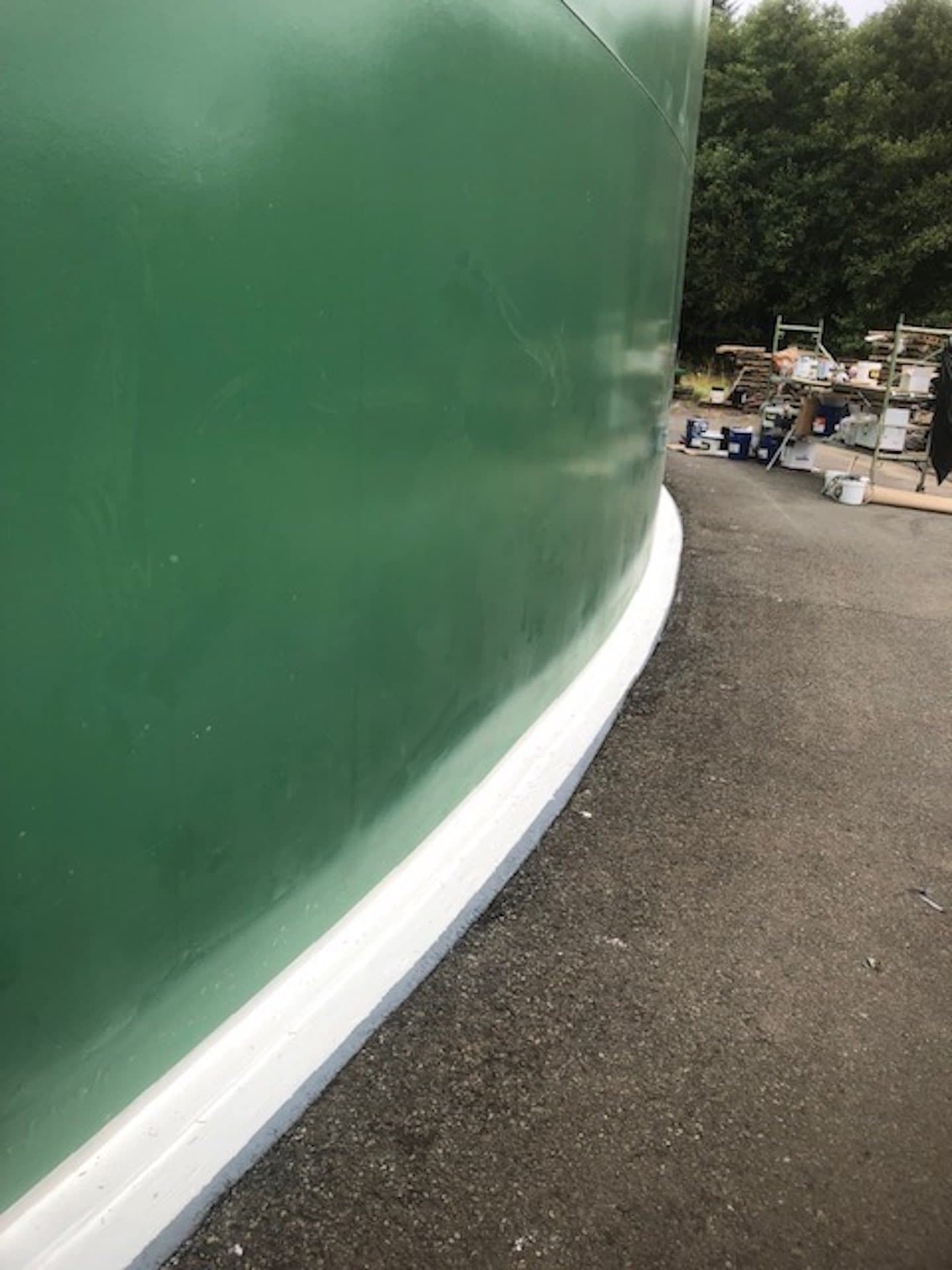
That ring of caulk around your above-ground storage tank looks fine from the outside. But underneath? Water has been migrating beneath the steel for months—maybe years—quietly eating away at your annular ring and tank bottom. By the time corrosion becomes visible, the damage is already extensive. And expensive.
For Pacific Northwest tank farm operators, this scenario plays out repeatedly. The region's wet climate accelerates the cycle, but the root cause isn't the weather—it's the fundamental flaw in how traditional sealants work.
The Caulking Problem Nobody Talks About
Conventional tank chime sealants—mastic tapes, silicone caulks, and bituminous compounds—share a common weakness: they fail early in their service life, often within just two to five years under real-world conditions. Manufacturers may claim 10-20 year lifespans, but those numbers assume ideal conditions that don't exist at the base of a working storage tank.
Here's what actually happens: The tank expands and contracts with temperature changes and fill levels. That movement creates stress at the seal interface. Meanwhile, UV radiation breaks down the sealant's polymer structure, causing it to harden and crack. Rain, condensation, and groundwater find those cracks. And once water gets underneath the seal, the real problem begins.
Traditional sealants create a vapor barrier—they don't just keep water out, they trap moisture in. Any water that penetrates a crack or gap has no way to escape. It accumulates in the sand bed beneath the tank floor, creating a perpetually wet environment against the underside of the steel. That's the perfect recipe for crevice corrosion, pitting corrosion, and eventually stress corrosion cracking.
Why Tank Base Corrosion Is So Destructive
Corrosion at the tank chime and annular ring is particularly insidious because it's hidden from view. The damage progresses invisibly until it creates through-wall defects—at which point you're facing potential product loss, environmental contamination, and regulatory violations.
The corrosion mechanisms at work include crevice corrosion where the steel contacts the foundation, galvanic corrosion between dissimilar metals, and oxygen concentration cell corrosion in areas with inconsistent moisture exposure. All of these are driven by one factor: water that shouldn't be there.
For facilities storing petroleum products, chemicals, or other hazardous materials, the stakes extend well beyond repair costs. A leaking tank bottom can contaminate soil and groundwater, triggering cleanup obligations that dwarf the cost of the tank itself.
Warning
Corrosion at the tank perimeter is extremely difficult to detect until significant damage has occurred. By the time you see external signs of deterioration, internal wastage may already require major repairs or tank replacement.
The Breathable Membrane Difference
The solution isn't a better caulk—it's a fundamentally different approach to tank base sealing. Microporous membrane technology addresses the failure modes that defeat traditional sealants while solving the trapped moisture problem that makes corrosion inevitable.
Belzona 3111 (Flexible Membrane) represents this approach. Unlike conventional sealants, this water-based acrylic system creates a coating that's impermeable to liquid water but permeable to water vapor. Water droplets can't penetrate from outside, but moisture trapped beneath the tank can escape through the membrane's microporous structure.
This one-way moisture transfer is critical. It means the sand bed under your tank can actually dry out over time, rather than accumulating moisture that accelerates corrosion. The substrate breathes while remaining protected from rain, condensation, and surface water.
The system also addresses movement-related failures through inherent flexibility. Where rigid sealants crack when tanks expand and contract, the membrane stretches and recovers—maintaining its seal through thermal cycling and fill/empty cycles that would destroy traditional caulking.
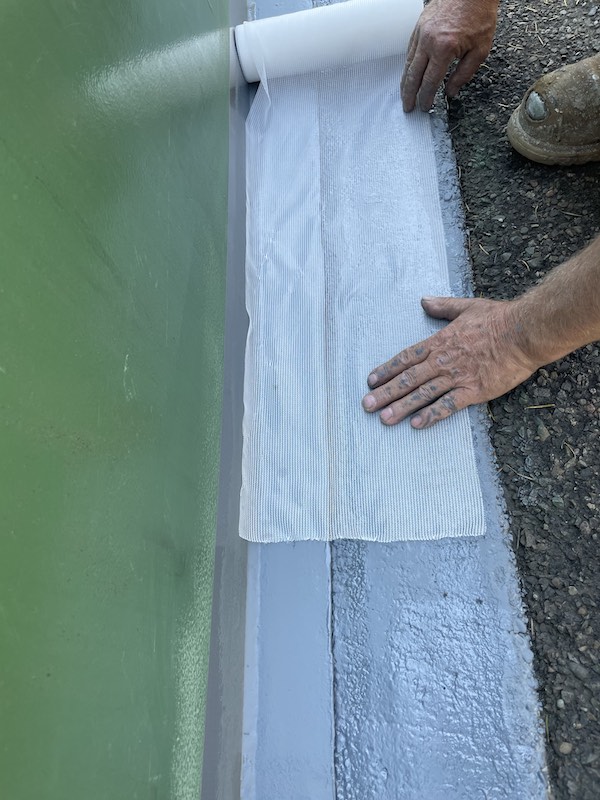 Installing 9311 Sheet into Belzona 3111 | 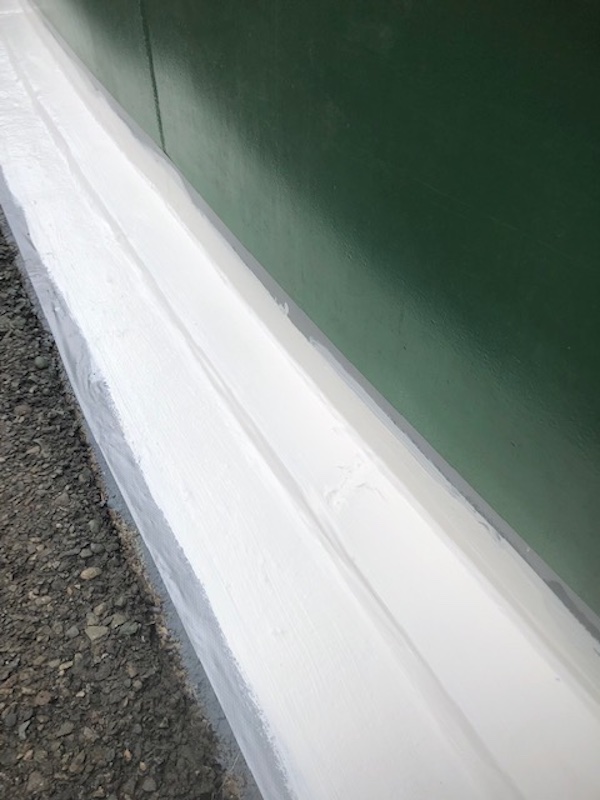 9311 Wetted out with Belzona 3111 |
Real-World Performance: What the Data Shows
One refinery had been continuously reapplying failed tank base sealing systems—the typical cycle of install, fail, repeat that consumes maintenance budgets without solving the underlying problem. They switched to a Belzona membrane system on eleven tanks, including both carbon steel and stainless steel construction.
After 13 years in service, inspection found the system in excellent condition. No cracking. No disbondment. No water infiltration. The tank bases remained protected while the membrane continued allowing trapped moisture to escape.
That 13-year performance stands in stark contrast to conventional sealants that may need replacement every three to five years under similar conditions. When you factor in the labor costs of repeated applications—plus the corrosion damage that occurs during the intervals when failed sealant allows water migration—the economics favor the longer-lasting solution decisively.
Another advantage: the membrane allows non-destructive testing of the underlying steel. Inspectors can verify annular ring thickness through the flexible coating without damaging or removing it—something impossible with most rigid sealing systems.
Pro tip
The best time to apply tank base protection is during construction or immediately after tank installation, before any moisture accumulates beneath the floor. For existing tanks, apply membrane systems after allowing adequate drying time following removal of failed sealants.
What Proper Tank Base Sealing Looks Like
A complete tank base sealing system involves more than just applying a coating. The process starts with removing any existing failed sealant, loose material, and surface contamination from both the steel annular ring and the concrete foundation.
Surface conditioning ensures proper adhesion to both substrates—an important consideration since tank base seals must bridge the transition between steel and concrete, two materials with very different properties. Where gaps or voids have developed between the tank floor and foundation, backer rod provides support for the membrane.
Bridging tape over the joint between the tank and concrete base creates a smooth transition for the membrane application. The membrane itself goes on in two coats, with reinforcement sheet embedded in the first coat while wet. This reinforcement adds durability and helps the system handle movement without cracking.
The entire application requires no hot work—an important safety consideration for tanks containing flammable materials. Most systems can be applied while tanks remain in service, eliminating the need to drain and degas for routine maintenance sealing.
The Pacific Northwest Factor
Washington and Oregon facilities face particular challenges with tank base corrosion. Extended rainy seasons mean more opportunity for water infiltration. Temperature swings between seasons stress traditional sealants. Coastal facilities deal with salt-laden air that accelerates corrosion wherever moisture accumulates.
These conditions make breathable membrane technology especially valuable. The ability to let trapped moisture escape rather than sealing it against the steel addresses the fundamental challenge of maintaining tank integrity in a wet climate.
For facilities subject to environmental regulations—and in the Pacific Northwest, that's essentially everyone—preventing tank base corrosion isn't just about asset protection. It's about avoiding the regulatory complications that come with product releases and soil contamination.
Planning Your Tank Base Protection Strategy
The most cost-effective approach treats tank base sealing as preventive maintenance rather than emergency repair. Applying protection before corrosion starts costs a fraction of what you'll spend addressing damage that's already occurred.
For existing tanks with failed or deteriorating sealants, the priority is stopping water infiltration as soon as possible. Every month of continued moisture migration adds to the corrosion burden you'll eventually need to address.
Belzona Technology Northwest provides tank base sealing assessments and applications throughout the Pacific Northwest. Whether you're planning protection for new construction or need to address existing corrosion concerns, our technical team can help develop a strategy that matches your facility's specific requirements.