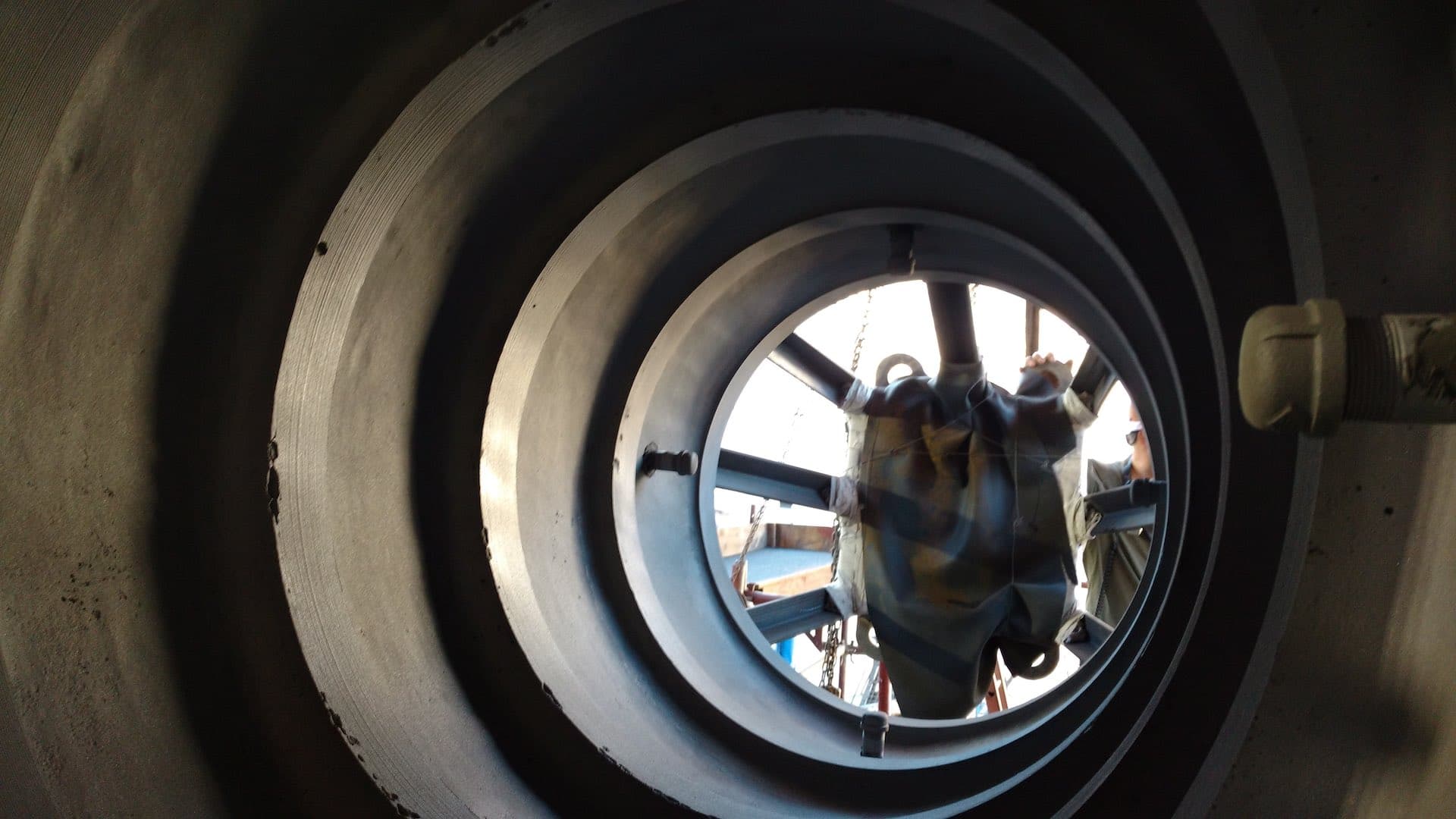
For Pacific Northwest fishing fleet operators, extended time in drydock means they are losing money. Every day a vessel sits out of the water during peak season is a day of missed revenue—and stern tube corrosion is one of the most common reasons boats end up on the hard ahead of schedule. But what if you could address stern tube damage without hauling out?
Understanding Stern Tube Corrosion
The stern tube assembly—where your propeller shaft exits the hull—operates in one of the harshest environments on any vessel. Constant exposure to seawater, mechanical stress from shaft rotation, and the galvanic interactions between dissimilar metals create ideal conditions for accelerated corrosion.
In the cold, oxygen-rich waters of Puget Sound, Alaska, and the Pacific coast, stern tube corrosion can progress faster than vessel owners expect. Common indicators include water intrusion past shaft seals, visible pitting or wastage on exposed stern tube surfaces, difficulty maintaining seal compression, vibration or noise from shaft misalignment caused by bearing surface deterioration, and oil sheen in the water near the stern.
Left unaddressed, stern tube corrosion compromises vessel safety and can lead to catastrophic shaft seal failure. Traditional repairs require drydocking—an expensive proposition that takes vessels out of service during critical fishing windows.
The Drydock Dilemma
Seattle-area boatyards stay busy year-round, and scheduling drydock time often means waiting weeks or accepting whatever slot opens up—regardless of your fishing schedule. Add the direct costs of haul-out, blocking, and yard fees, plus the indirect costs of crew standby and missed fishing days, and an unplanned stern tube repair can easily run into tens of thousands of dollars before the actual repair work even begins.
This economic reality forces many operators into difficult choices: defer repairs and risk bigger problems, or haul out and miss prime fishing. Neither option is good for the bottom line.
Pro tip
Annual stern tube inspections during routine maintenance can catch corrosion early. A protective coating applied at 10% wastage prevents the 30% wastage that triggers mandatory repairs.
Cold-Applied Propeller Shaft Repair: Extending Time Between Haul-Outs
Polymer composite technology has changed the equation for stern tube and propeller shaft repair. These materials bond to properly prepared metal surfaces and can be applied without hot work—critical in marine environments where fire risk must be minimized. More importantly, certain formulations can be applied and cured underwater, enabling repairs that previously required drydocking.
Belzona 1111 Super Metal serves as the workhorse for stern tube rebuilding. This paste-grade epoxy composite can restore corroded surfaces to original dimensions, rebuilding bearing seats and sealing surfaces that have lost material to corrosion. Applied in layers and shaped to match original contours, it provides a machinable surface that can be finished to specification.
For corrosion protection after repairs—or preventive coating on sound surfaces—Belzona 5811 Immersion Gradecreates a barrier coating specifically formulated for permanent seawater immersion. This system resists the corrosive attack that damages unprotected steel in marine environments, extending the intervals between required maintenance.
Where shaft surface damage requires attention, Belzona 1121 Super XL-Metal offers a fluid-grade composite that can restore worn or pitted shaft surfaces. Its self-leveling properties make it ideal for creating smooth, concentric surfaces on rotating components.
For vessels operating in demanding conditions where propeller turbulence and debris create ongoing wear concerns, Belzona 1341 Supermetalglide provides an additional layer of protection. This hydrophobic epoxy coating delivers excellent cavitation and abrasion resistance—critical for stern tube components exposed to the turbulent flow zone near the propeller. Applied over rebuilt surfaces or as preventive protection on sound equipment, 1341 creates an ultra-smooth finish that's 15 times smoother than polished stainless steel. That surface quality doesn't just resist damage—it actually reduces drag and improves hydrodynamic efficiency, meaning less strain on shaft seals and bearings over time. For fishing vessels pushing hard through Pacific Northwest waters, that combination of protection and performance can translate to measurable fuel savings alongside extended service intervals.
What Repairs Can Be Done Without Drydocking?
The scope of in-water repairs depends on access and the specific damage present. With the vessel afloat and the shaft secured, many stern tube repairs can be accomplished by divers or through shaft removal without hauling the boat.
Typical in-water or pier-side repairs include external stern tube surface restoration, cutless bearing housing rebuilding, seal seat repair and resurfacing, shaft sleeve buildup and protection, and corrosion barrier coating application. More extensive damage—particularly internal stern tube deterioration or structural issues—may still require drydocking. However, even in these cases, composite repairs often reduce the scope of hot work needed, shortening yard time and reducing costs.
Product Highlight:
Belzona 5811 is specifically designed for permanent seawater immersion. Unlike generic epoxy coatings, it resists cathodic disbondment—the failure mode that causes coatings to lift away from protected steel in marine environments.
"I coated a stern tube with 5811 on a boat out of Newport six years ago. The Owner just called to tell me it still looks brand new—no pitting, no disbondment. We're doing his other boat after the season" — Ryan Brown, Portland Consultant
Planning Your Stern Tube Maintenance Strategy
The most cost-effective approach to stern tube maintenance combines regular inspection with proactive protection. Before each season, have your stern tube assembly inspected for early signs of corrosion. Apply protective coatings before damage occurs rather than waiting for deterioration that requires rebuilding.
When repairs are needed, assess whether the work can be accomplished in-water or pier-side before scheduling drydock time. Many repairs that operators assume require hauling can actually be completed with the vessel afloat—saving both money and time out of service.
Belzona Technology Northwest works with fishing fleet operators throughout Seattle, the San Juan Islands, Bellingham, and Alaska to develop stern tube maintenance programs that maximize time on the water. Our marine-certified technicians can assess your specific situation and recommend the most practical repair approach.
"The captains I work with year after year—they're not calling me for emergencies anymore. We've got them on a protection schedule that keeps them fishing." — Scott Taylor, Western WA Consultant
The Bottom Line
Stern tube corrosion doesn't have to mean emergency drydocking and missed fishing days. With proper inspection, proactive protection, and access to cold-applied repair technology, Pacific Northwest fishing vessels can extend intervals between haul-outs while maintaining the reliability their operations demand.The technology exists to keep your boat on the water longer. The question is whether you're taking advantage of it.