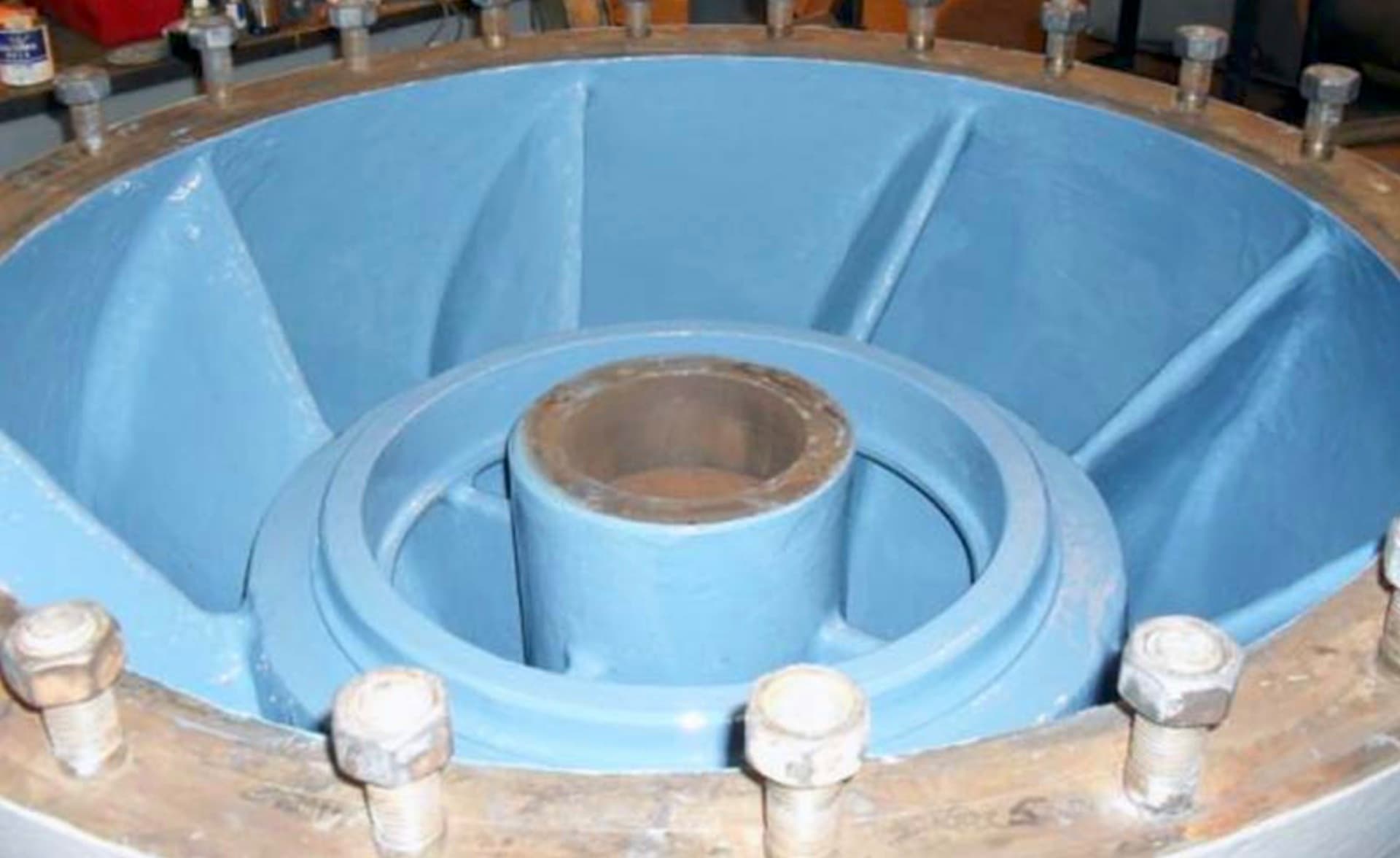
Pumps are the workhorses of industrial facilities—and in Washington and Oregon, they're also among the biggest energy consumers. A single large process pump can draw 500+ horsepower around the clock, adding up to $200,000 or more in annual electricity costs. When that pump loses just 5% efficiency to internal corrosion and surface roughness, you're burning an extra $10,000 per year in power—per pump.
Most facilities accept this gradual efficiency loss as inevitable. It isn't. A specialized pump coating can recover lost efficiency, reduce energy consumption by up to 20% on refurbished equipment, and pay for itself within months.
Why Pumps Lose Efficiency Over Time
Every centrifugal pump starts life with smooth, precision-machined internal surfaces. Water or process fluid flows cleanly from suction to discharge with minimal turbulence. But from day one, those surfaces are under attack.
Corrosion roughens the volute and impeller surfaces. Even mild surface oxidation creates microscopic peaks and valleys that disrupt laminar flow. In aggressive environments—saltwater, chemical processes, wastewater—corrosion accelerates dramatically.
Erosion from suspended solids scours away material, particularly at high-velocity areas like impeller vane tips and cutwater edges. The resulting profile changes alter hydraulic geometry and reduce head capacity.
Cavitation creates localized pitting that further roughens surfaces and can damage impeller vanes structurally.
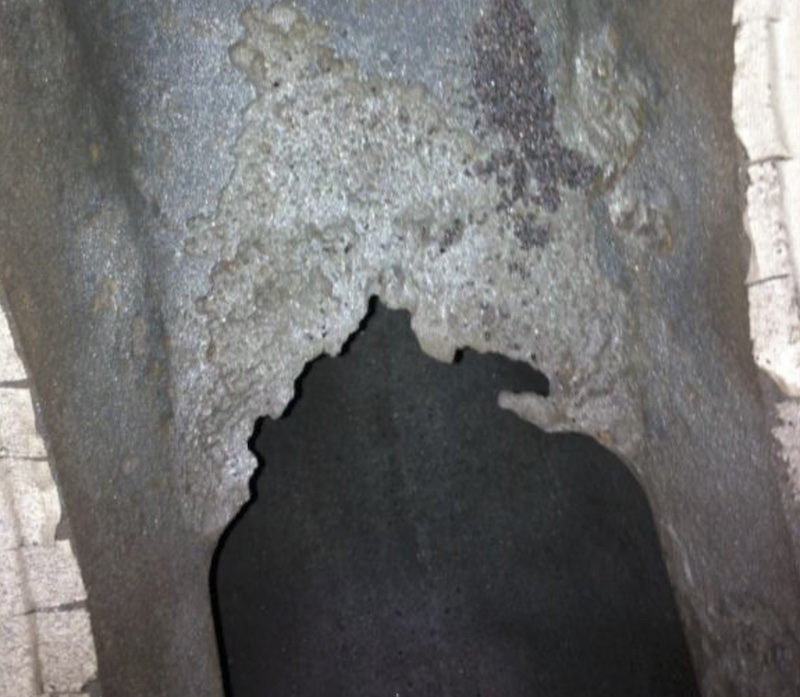 Cavitation Damage Before Repair | 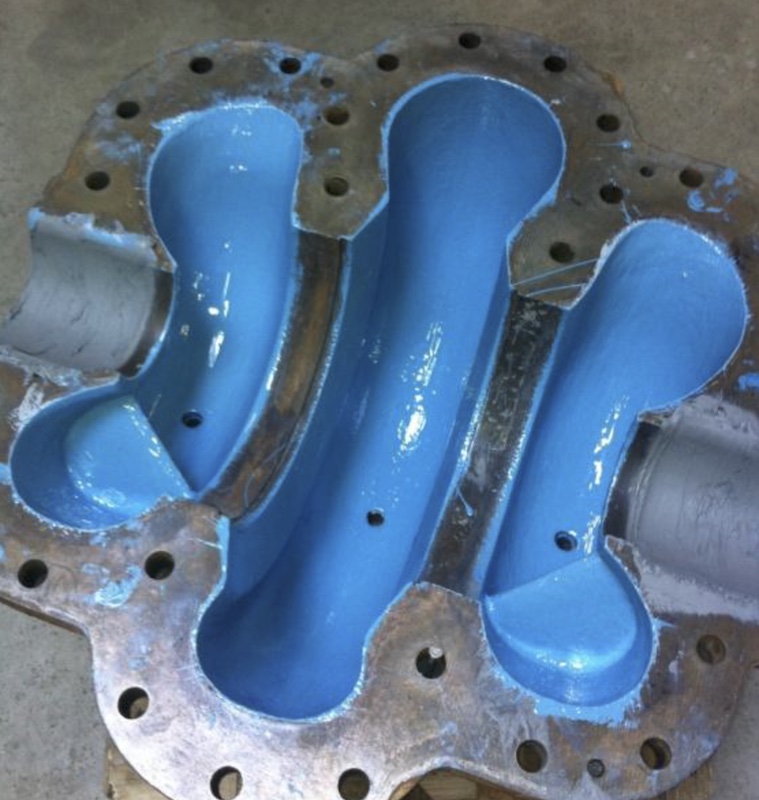 After Belzona 1111 and 1341 Application |
Scale and deposits build up in low-flow areas, narrowing passages and creating turbulence.
The cumulative effect: a pump that delivered 85% efficiency when new might drop to 70% after a decade of service. That 15-point efficiency loss translates directly to wasted electricity—you're paying for energy that produces heat and turbulence instead of flow.
Pro tip
Measure your pump efficiency annually using flow, head, and power data. A pump that's dropped more than 5% from baseline is a strong candidate for coating—the energy savings will likely cover the cost within the first year.
How Surface Coatings Restore Efficiency
The physics are straightforward: smoother surfaces mean less friction, less turbulence, and more useful work from each kilowatt consumed.
Belzona 1341 (Supermetalglide) was engineered specifically for this application. The coating creates a surface 15 times smoother than polished stainless steel, with hydrophobic properties that actively repel water. This ultra-smooth, low-friction surface reduces boundary layer turbulence and allows fluid to flow more efficiently through the pump.
• 6% increase in peak efficiency
• 5.1 kWh reduction in power consumption at duty point
• Improved flow characteristics across the operating curve
On refurbished pumps—where corrosion and erosion damage is first rebuilt with Belzona 1111 (Super Metal) before coating—efficiency gains of 15-20% are common. You're not just restoring original performance; you're exceeding it.
Product Highlight:
Belzona 1341 (Supermetalglide) is a two-component epoxy coating with ceramic and hydrophobic additives. It provides exceptional smoothness for efficiency gains while also protecting against erosion and corrosion. It bonds to steel, stainless steel, cast iron, bronze, and aluminum, and can be brush or spray applied. Service temperature range extends to 60°C (140°F) continuous immersion.
The ROI Calculation
Here's where pump coatings separate from most maintenance investments—the payback is measurable and often rapid.
Example: A 200 HP cooling water pump running continuously
• Motor power: 200 HP (149 kW)
• Operating hours: 8,760/year
• Electricity rate: $0.08/kWh
• Annual energy cost: $104,500
• Efficiency loss (aged pump): 12%
• Wasted energy cost: $12,540/year
Coating cost for a pump this size typically runs $8,000-12,000 including surface prep and application. If the coating recovers even half the lost efficiency, annual savings exceed $6,000—a payback period under two years. Full efficiency recovery means payback in less than twelve months.
Multiply this across a facility running 10, 20, or 50 pumps, and the energy savings become a significant budget line item.
Application Process
Pump coating can be performed during scheduled maintenance outages. The typical sequence:
1. Disassemble and inspect — Remove the impeller and assess volute condition. Document corrosion, erosion, and any dimensional loss.
2. Rebuild damaged areas — Fill pits and erosion damage with Belzona 1111 to restore original profiles.
3. Surface preparation — Grit blast to SSPC-SP10 (near-white metal) with 75-micron minimum profile.
4. Apply coating — Brush or spray apply Belzona 1341 in two contrasting coats for visual coverage confirmation. Total dry film thickness: 250-500 microns.
5. Cure and reassemble — Allow 16-24 hours cure at 20°C before returning to service.
For facilities without in-house coating capability, the pump can be sent out for professional application—or BTNW can perform the work on-site during your maintenance window.
Beyond Efficiency: Additional Benefits
While energy savings drive most pump coating decisions, the protection extends equipment life in other ways:
• Corrosion resistance keeps surfaces smooth longer, maintaining efficiency gains
• Erosion protection reduces wear from suspended solids
• Easier cleaning — the hydrophobic surface resists scale adhesion
• Reduced maintenance frequency — coated pumps hold efficiency longer between overhauls
For Washington and Oregon facilities facing both rising energy costs and aging pump infrastructure, coating represents one of the highest-ROI maintenance investments available.