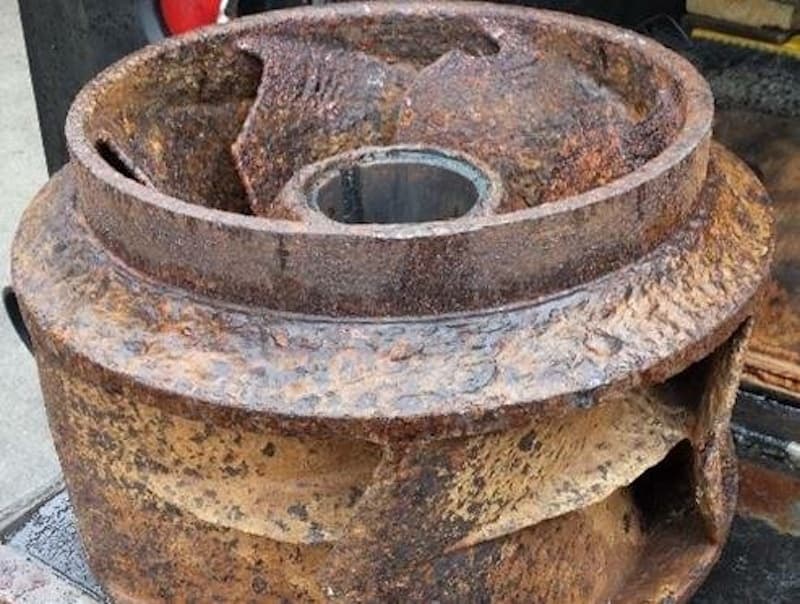
Sea water pumps on Puget Sound vessels and shoreside facilities face one of the most aggressive operating environments imaginable. The combination of salt water, dissolved oxygen, biological fouling, and suspended sediment attacks pump internals relentlessly. A pump that ran efficiently for years can lose 15-20% performance in a single season—costing thousands in wasted fuel and premature replacements.
But marine pump corrosion isn't inevitable. The right repair and protection strategy can rebuild damaged pumps to better-than-new efficiency while dramatically extending service life in Puget Sound conditions.
How Sea Water Destroys Pump Efficiency
Marine pump repair technicians in Washington see the same failure patterns repeatedly:
Impeller erosion-corrosion roughens vane surfaces and wears away material at the tips. The combination of salt water chemistry and high-velocity flow creates accelerated attack at precisely the areas most critical to pump performance.
Volute pitting disrupts the smooth flow path that efficient pumps require. Once pitting begins, the irregular surface creates turbulence that further accelerates corrosion and erosion.
Wear ring degradation opens clearances that allow internal recirculation. Energy that should push water through the discharge instead churns uselessly inside the pump.
Galvanic attack occurs where bronze impellers meet cast iron housings, or where stainless shafts contact dissimilar metals. Puget Sound's salt water is an excellent electrolyte that accelerates these electrochemical reactions.
Biological fouling from barnacles, mussels, and algae narrows passages, creates turbulence, and establishes oxygen-differential corrosion cells under the growth.
The result: pumps work harder to move less water, fuel consumption increases, and maintenance intervals shorten. Eventually the pump fails entirely—often at the worst possible time.
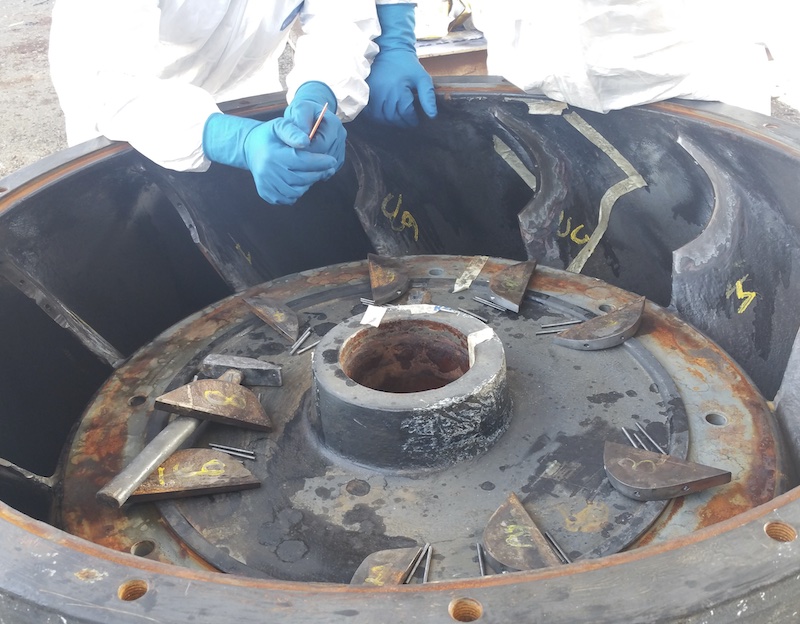 Seawater Pump Corrosion | 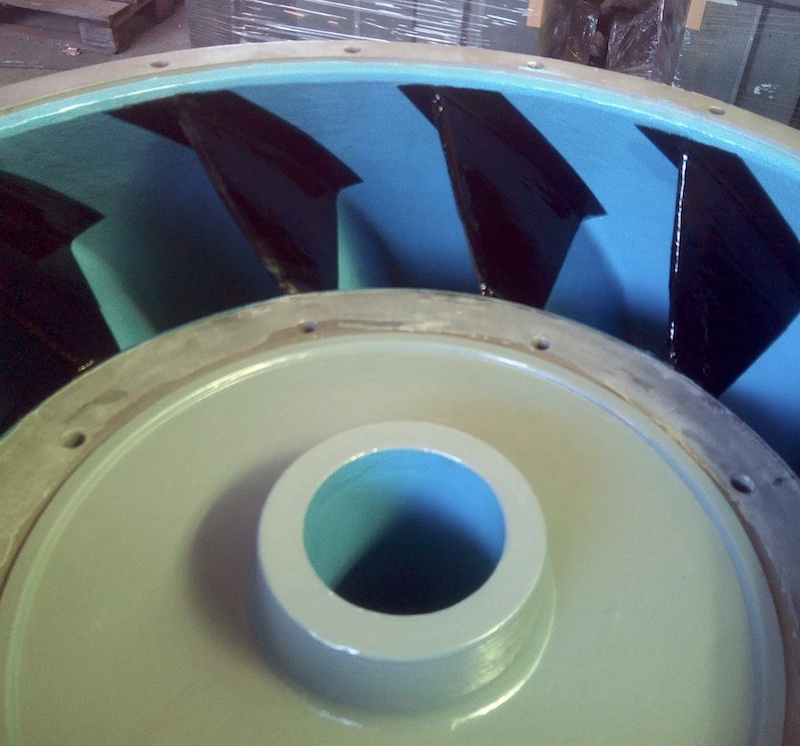 After Repair and Belzona 1341 |
The Rebuild and Protect Strategy
Rather than simply replacing corroded pumps, a rebuild-and-coat approach restores efficiency while adding protection that extends the next service interval significantly. The process combines metal rebuilding with efficiency coatings:
Step 1 — Rebuild corroded metal: Belzona 1111 (Super Metal) restores pitted and eroded surfaces to original—or better—profiles. This cold-applied epoxy composite machines like metal and withstands sea water immersion. Worn impeller tips can be rebuilt, volute erosion filled, and wear ring surfaces restored without welding or hot work.
Step 2 — Apply ceramic-filled coating: Belzona 1321 (Ceramic S-Metal) provides erosion and corrosion resistance for severe-service areas. The ceramic-reinforced epoxy handles the abrasive particles and aggressive chemistry of sea water service better than bare metal.
Step 3 — Efficiency coating on flow surfaces: Belzona 1341 (Supermetalglide) creates an ultra-smooth surface that reduces friction, improves flow characteristics, and resists fouling. Independent testing shows efficiency gains of 5-7% on new pumps—even more on refurbished units where the coating also addresses surface roughness from prior corrosion.
PRODUCT HIGHLIGHT:
Belzona 1341's hydrophobic surface resists biological fouling—barnacles and mussels have difficulty adhering to the slick coating. This alone can significantly extend service intervals for Puget Sound pumps where biofouling drives maintenance schedules.
The Efficiency Payback
For commercial vessels and shore facilities running sea water pumps continuously, efficiency gains translate directly to fuel savings:
Example: A 50 HP sea water cooling pump on a Puget Sound processing facility
• Original pump efficiency: 78% (degraded by corrosion)
• Post-rebuild efficiency: 85% (better than new)
• Annual operating hours: 6,000
• Electricity cost: $0.09/kWh
• Annual energy savings: approximately $2,800
Rebuild cost for a pump this size typically runs $3,000-5,000 including labor—payback in under two years from energy savings alone, not counting extended service life and avoided replacement costs.
For vessel operators, the math works even better. Fuel costs $3-5+ per gallon, and engine-driven pumps consume fuel in direct proportion to load. A 7% efficiency improvement means 7% less fuel consumed by pump loads.
Application Considerations for Marine Service
Sea water pump coating requires attention to several factors:
Surface preparation must remove all marine growth, corrosion products, and contamination. Grit blasting to SSPC-SP10 with appropriate profile is essential. Chlorides from sea water must be removed—fresh water washing after blasting helps.
Cure before immersion is critical. Belzona 1341 requires minimum 16 hours at 68°F before sea water exposure. Cold shop temperatures extend this—plan accordingly. Premature immersion compromises the coating bond.
Clearance considerations matter for wear rings and close-tolerance areas. The coating adds 250-500 microns of thickness. For wear rings, either machine after coating or account for buildup in your rebuild dimensions.
Pro tip
Schedule pump rebuilds during winter haul-outs or slow-season downtime. Proper cure time at controlled temperature produces better results than rushing a repair before the next trip.
Beyond Pumps: Other Marine Applications
The same rebuild-and-protect approach works for other sea water system components:
• Heat exchanger tube sheets and headers
• Sea water strainers and valve bodies
• Stern tube and rudder bearings
• Bow thruster housings
• Sea chests and overboard discharge fittings
For Washington marine operators—from Puget Sound processors to Alaska-bound fishing vessels—protecting sea water systems from corrosion pays dividends in efficiency, reliability, and equipment life.
Ready to rebuild your sea water pumps? Contact Belzona Technology Northwest for pump assessment and coating services (we can recommend certified and trained application specialists). We work with marine facilities throughout Washington, Oregon, and Alaska to extend equipment life and improve efficiency in salt water service.