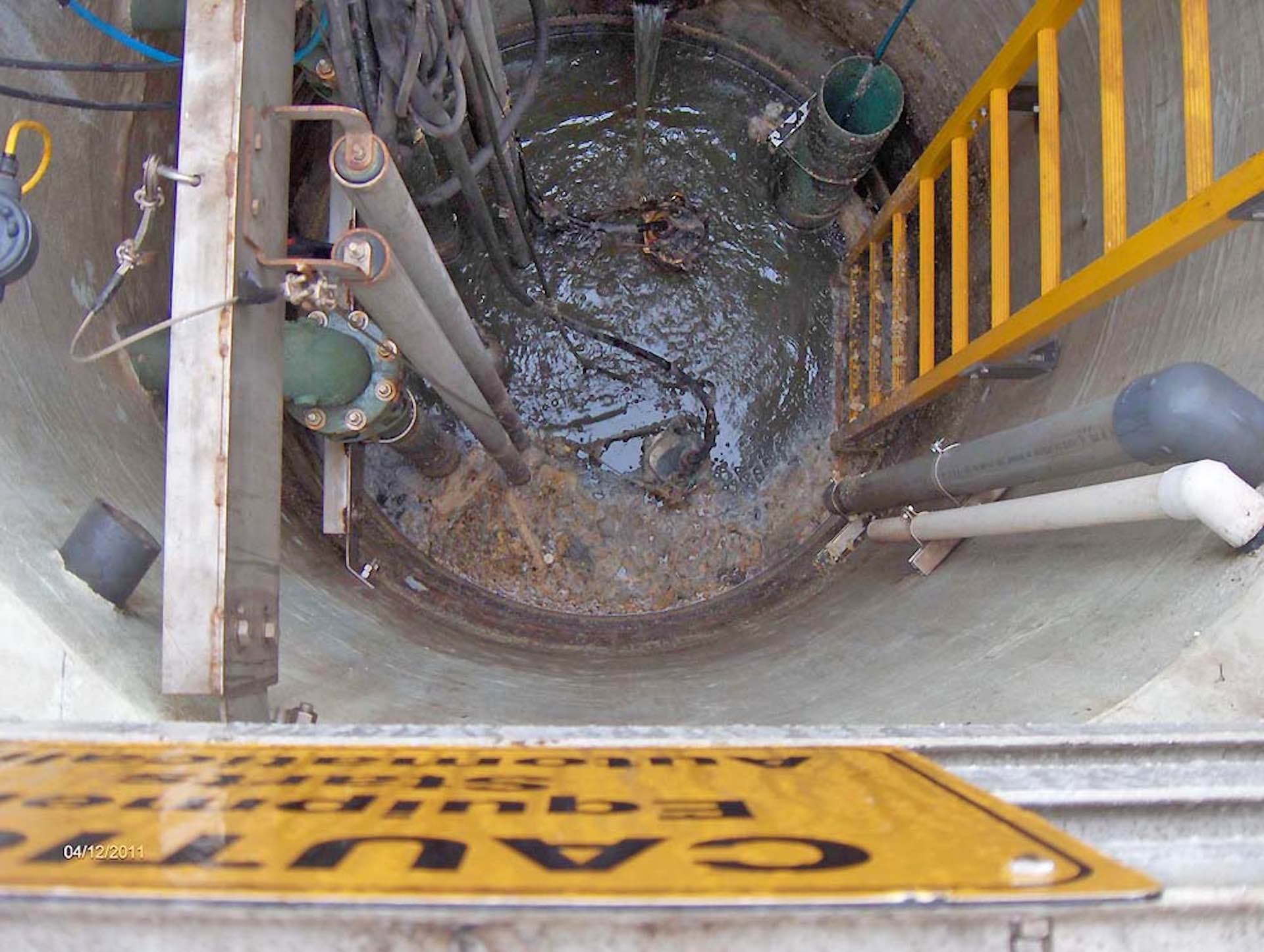
When a lift station pump fails, the clock starts immediately. Wastewater backs up, overflow risks escalate, and every hour of downtime compounds the problem. For Pacific Northwest utilities facing emergency pump failures, traditional repair timelines simply don't work. You need solutions that get pumps back in service the same day—and that's exactly what surface-tolerant polymer technology delivers.
The Lift Station Challenge
Municipal lift stations throughout Oregon and Washington operate under demanding conditions. Pumps handle raw sewage containing abrasives, corrosives, and debris that accelerate wear on impellers, volutes, and wear rings. The Pacific Northwest's wet climate means many stations run at high capacity for months at a time, with little opportunity for planned maintenance.
Common failure modes include cavitation erosion on impeller surfaces, corrosion-erosion in volute housings, wear ring deterioration causing efficiency loss, seal face damage, and casing pitting from chemical attack. When these failures occur, utilities face a difficult choice: wait days or weeks for replacement parts, or find a way to restore damaged components and return to service immediately.
Warning:
Operating pumps with degraded efficiency doesn't just waste energy—it accelerates wear on remaining components and increases the risk of catastrophic failure. Address efficiency losses promptly.
Why Surface-Tolerant Repairs Matter
In emergency repair scenarios, surface preparation is often the limiting factor. Conventional repair materials require extensive cleaning, sandblasting, and drying—processes that add hours to repair timelines. In lift station environments, where components may be wet or contaminated, achieving ideal surface conditions can be nearly impossible under time pressure.
Surface-tolerant repair materials change the equation. These specially formulated composites are designed to bond effectively to surfaces that would defeat conventional products—including damp substrates and surfaces with residual contamination. While surface preparation still matters, the requirements are achievable in emergency timeframes.
Belzona 1212 exemplifies this approach. Formulated specifically for repair situations where ideal conditions aren't available, this surface-tolerant composite adheres to substrates that would cause standard epoxies to fail. Its rapid cure profile enables same-day return to service—critical for utilities managing overflow risks.
Emergency Pump Repair: A Practical Approach
When a lift station pump fails, the repair strategy depends on the failure mode and available time. Here's how polymer composites address common emergency scenarios:
Impeller Erosion: Cavitation damage and abrasive wear reduce impeller efficiency and eventually cause imbalance. Belzona 1111 Super Metal can rebuild eroded vane profiles to original geometry. For severe cavitation environments, a protective overlay of Belzona 1341 Supermetalglide—a ceramic-reinforced coating—provides long-term erosion resistance while actually improving hydraulic efficiency through its smooth surface finish.
Volute and Casing Damage: Corrosion pitting and erosion patterns in pump casings disrupt flow patterns and reduce efficiency. Using Belzona 1212's surface-tolerant properties, volute surfaces can be rebuilt and protected without the extensive preparation that would be required for conventional repair.
Wear Ring Restoration: Excessive clearance between wear rings causes internal recirculation that dramatically reduces pump output. Belzona 1111 can restore wear ring surfaces to proper clearances, eliminating the wait for OEM replacement parts.
Pro tip
Keep Belzona 1212 in your maintenance inventory. Having surface-tolerant repair materials on hand when emergencies occur eliminates delays during critical repairs. And Belzona 1212 is versatile; it can bond, smooth, fair - many different things
Same-Day Return to Service
The combination of surface-tolerant formulations and accelerated cure options makes same-day pump repairs achievable for many emergency scenarios. A typical repair sequence looks like this: mechanical cleaning removes loose material and gross contamination, solvent cleaning addresses residual oils, damaged areas are built up with appropriate composite material, and components are reassembled and returned to service after initial cure.
For critical situations, heated cure techniques can further accelerate timelines. What might be an overnight cure at ambient temperature can often be reduced to hours with proper heat application.
Beyond Emergency: Building Resilience
While emergency repairs address immediate failures, the smartest utilities take a proactive approach. Applying protective coatings to pump components during planned maintenance prevents the damage that causes emergency failures. Belzona 1341's erosion-resistant surface can extend impeller life by 300% or more in severe service applications.
Consider implementing a pump protection program that includes protective coating during routine overhauls, inventory of surface-tolerant repair materials for emergencies, staff training on basic repair techniques, and established relationships with repair specialists for complex situations.
Pacific Northwest Utility Support
BTNW provides emergency repair support and preventive maintenance programs for utilities throughout Oregon, Washington, and the Pacific Northwest. Our technicians understand the urgency of lift station failures and the regulatory pressures utilities face. Whether you're dealing with an active emergency or planning to prevent the next one, we can help develop solutions that fit your operational reality.