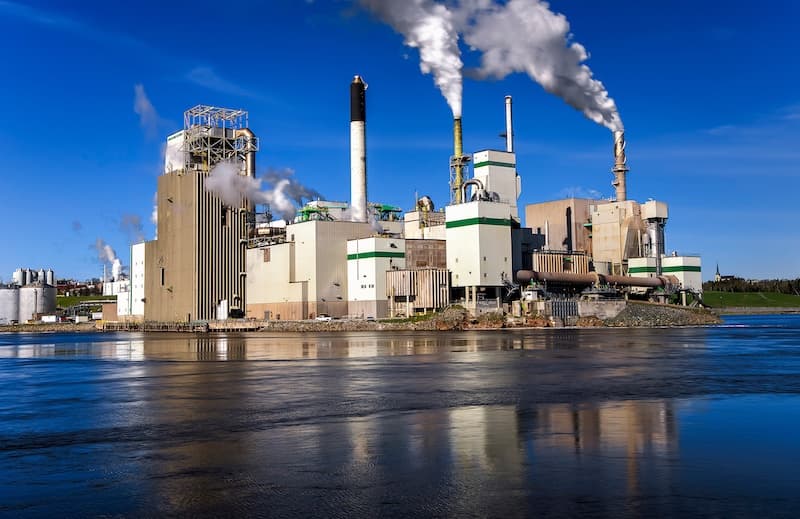
Digesters are the heart of any pulp mill operation—and in the Pacific Northwest, they're working overtime. From Longview to Lewiston to Port Angeles, these high-temperature, high-pressure vessels face relentless chemical attack from cooking liquors while processing millions of tons of wood fiber annually. When corrosion and erosion start eating away at digester walls, linings, and internal components, mills face a difficult choice: schedule an expensive shutdown for traditional repairs, or watch efficiency decline until failure forces their hand.
There's a third option that more PNW mills are discovering: cold-applied epoxy composites that repair and protect digesters without the delays, hazards, and costs of hot work.
Why Digesters Fail—And Why It Matters
Continuous digesters operate under brutal conditions. Temperatures regularly exceed 170°C (338°F), while the alkaline cooking liquors—white liquor and black liquor—aggressively attack steel surfaces. Over time, this combination produces several familiar problems:
Corrosion of vessel walls and internals. The alkaline environment, combined with sulfur compounds in kraft pulping, eats away at carbon steel. Wall thickness decreases, structural integrity suffers, and eventually you're looking at through-wall defects or catastrophic failure.
Erosion at high-flow areas. Extraction screens, blow lines, and circulation piping see constant abrasion from wood chips and fiber slurry. The erosion-corrosion combination accelerates damage exponentially.
Lining failures. Many digesters rely on brick, tile, or older coating systems that crack, spall, or debond under thermal cycling. Once the lining goes, the underlying steel is exposed to direct chemical attack.
Weld degradation. Heat-affected zones around welds are particularly vulnerable. Stress corrosion cracking can develop in stainless steel components exposed to chlorides in the process.
For a mill running 24/7, every hour of unplanned downtime costs tens of thousands of dollars in lost production. Scheduled turnarounds are expensive enough—but emergency shutdowns during peak demand can be devastating.
Pro tip
Don't wait for visible leaks. Regular ultrasonic thickness testing on digester shells can identify thinning areas before they become critical. Catching wall loss at 80% remaining thickness gives you repair options; catching it at 20% means replacement.
The Problem with Traditional Repair Methods
Historically, digester repairs meant one of two approaches: weld overlay or complete replacement of damaged sections. Both require taking the vessel out of service, cooling it down, and conducting hot work inside a confined space—a process that introduces significant safety risks and extends outage duration.
Welding in a digester environment presents specific challenges. Preheat requirements add time. Post-weld heat treatment may be necessary. The heat-affected zone created by welding can itself become a future corrosion initiation site. And in some cases, the base metal has degraded to the point where achieving sound welds becomes difficult or impossible.
For PNW mills operating with tight maintenance windows and aggressive production schedules, there's growing interest in alternatives that don't require hot work permits, fire watches, and weeks of downtime.
Cold-Applied Composites: How They Work
Epoxy-based repair composites cure at ambient or elevated temperatures through chemical reaction—not heat application. This means they can be applied without hot work, without spark hazards, and in many cases, with the vessel still warm from recent operation.
For digester applications, three Belzona materials see the most use:
Belzona 1111 (Super Metal) serves as the workhorse rebuilding compound. This paste-grade epoxy composite bonds to steel, stainless steel, and most metals to rebuild areas lost to corrosion or erosion. It machines easily after cure, allowing restoration of critical dimensions on components like valve seats, pump housings, and screen supports. For digester internals where wall thickness has been lost, 1111 rebuilds the profile and provides a foundation for protective coatings.
Belzona 1321 (Ceramic S-Metal) adds ceramic reinforcement for erosion resistance in continuous immersion up to 60°C (140°F). Where slurry flow creates ongoing abrasion—extraction lines, circulation piping, screen assemblies—this coating provides a harder, more wear-resistant surface than bare steel.
Belzona 4311 (Magma CR1) is purpose-built for chemical resistance at elevated temperatures. This coating system handles continuous immersion in acids and alkalis up to 100°C (212°F), making it suitable for protecting digester walls, secondary containment areas, and related process equipment from the aggressive chemistry of pulping liquors.
PRODUCT HIGHLIGHT:
Belzona 4311 (Magma CR1) is designed specifically for chemical containment applications. It provides long-term protection against both organic and inorganic acids, alkalis, and solvents. The coating can be brush or spray applied and withstands the thermal cycling common in batch digester operations.
Application Considerations for Mill Maintenance Teams
Surface preparation drives success in any coating application, and digesters are no exception. The good news: cold-applied composites are more tolerant of real-world conditions than many traditional coatings.
Surfaces should be cleaned of loose scale, rust, and process residue. Abrasive blasting to SSPC-SP10 (near-white metal) provides ideal adhesion, but where blasting isn't practical, aggressive mechanical preparation with needle guns or grinding can achieve acceptable results. Belzona 1161 will bond to properly prepared surfaces even with some residual contamination—a significant advantage when working inside a vessel that's been processing wood chips and cooking liquor for decades.
Cure times vary with temperature. At 20°C (68°F), most Belzona composites reach handling strength in 5-6 hours and full cure in 16-24 hours. Warmer conditions accelerate cure; a digester that's been recently emptied but still holds residual heat can actually speed the repair timeline.
For larger rebuilding projects, work in sections. Apply the repair composite, allow it to cure, then move to adjacent areas. This approach maintains access and ensures each repair achieves full strength before the vessel returns to service.
Scheduling Repairs During Planned Outages
The most successful digester repair programs integrate cold-applied solutions into existing turnaround schedules. Rather than treating coating work as an afterthought, leading mills now include composite repairs in their outage planning from day one.
A typical approach:
1. Conduct pre-outage inspection to identify and map damage areas
2. Develop repair specifications and material quantities before shutdown
3. Begin surface preparation immediately once the vessel is emptied and cooled
4. Apply rebuilding compounds to restore wall thickness and component profiles
5. Follow with protective coatings while cure time accumulates
6. Return vessel to service with extended maintenance-free intervals
Mills that have adopted this approach report digester coating life of 8-10 years or more—significantly outperforming older lining systems that required attention every 2-3 years.
The Bottom Line for Pacific Northwest Mills
With 13 pulp and paper mills operating across Washington, Oregon, and Idaho, digester maintenance represents a significant ongoing investment for the regional industry. Cold-applied composite repairs offer a practical way to extend equipment life, reduce turnaround duration, and minimize the safety risks associated with hot work in confined spaces.
The technology isn't new—Belzona has been formulating industrial repair composites since 1952—but adoption in pulp and paper continues to grow as mills recognize the operational advantages. For maintenance managers facing their next digester turnaround, it's worth evaluating where cold-applied solutions might fit into the plan.